Never Bite the Hand That Feeds You
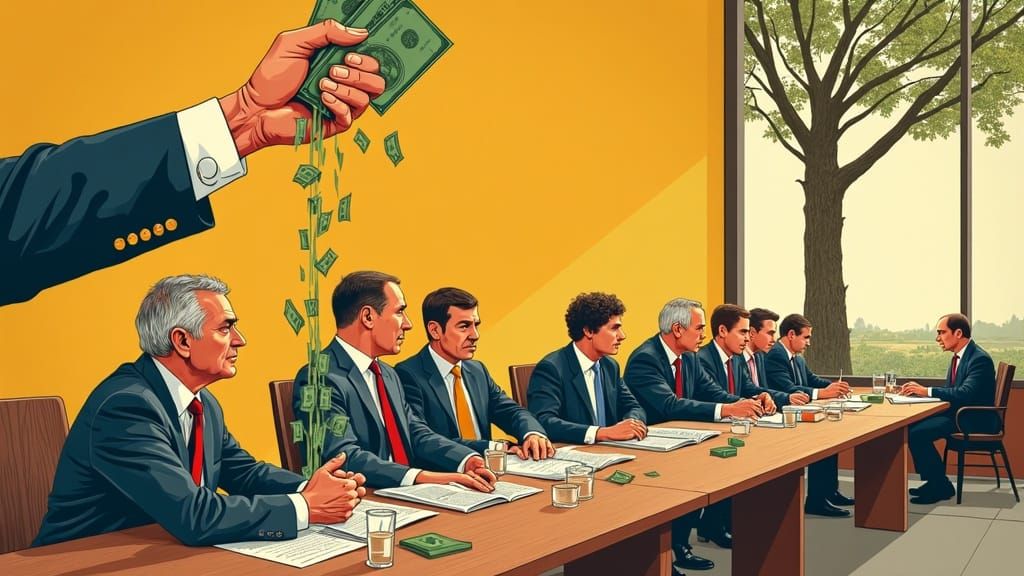
In Australia, the rule is simple. Follow the money. Trust self-interest. Never bite the hand that feeds you.
The Journalism Assistance Fund has just handed out tens of millions in wage subsidies to newsrooms. Nine Entertainment took the largest slice at $16.1 million. Its mastheads include the Sydney Morning Herald, The Age, the Australian Financial Review, Brisbane Times and WAtoday. Seven collected over $11.3 million for The West Australian, The Sunday Times, The Nightly and its regional Western Australian titles. Australian Community Media received $6.2 million for the Canberra Times, Newcastle Herald, Illawarra Mercury, The Examiner, The Border Mail and dozens more regional papers.
One major commercial player is conspicuously absent. News Corp Australia and Sky News received $0. Recipient lists published on grants.gov.au and reported by AdNews and Mumbrella contain no reference to News Corp or Sky. Sky News hosts Rita Panahi and Calista Clements have criticised the scheme on air, arguing that taxpayer money is flowing disproportionately to left-leaning outlets while the main right-leaning commercial news organisation was left out.
The ABC continues to draw its billion-dollar annual appropriation from the same taxpayer pot.
When the government signs the cheques, the incentive structure changes. A masthead that relies on state funding for journalist salaries develops a structural reluctance to savage the funding source. It is not usually crude censorship. It is career self-preservation, institutional culture, and the quiet understanding that the next round of grants goes to the outlets that play nicely.
The same logic applies elsewhere. The Therapeutic Goods Administration, Australia’s medicines regulator, recovers the vast majority of its costs through fees paid by the pharmaceutical companies it regulates. The official TGA Cost Recovery Implementation Statement 2025-2026 confirms that industry fees and charges make up the overwhelming share of its revenue. Only a small share comes from general revenue. The question is the same: how impartial can an institution be when the entities it is meant to oversee or criticise pay most of its bills?
You see the pattern across public broadcasters and grant recipients alike. Coverage of government policy softens during generous funding periods. Stories that might embarrass the hand that writes the cheques get softer framing or quieter placement. The public still gets journalism, but the edge is blunted.
The only reliable counterweight is media that refuses the money. Outlets funded solely by readers and subscribers have no structural reason to protect the government of the day. Their survival depends on delivering the scrutiny their audience actually wants, not the version that keeps the grants flowing.
Independent media is not perfect. It can be uneven, under-resourced, and occasionally captured by its own donors. But it is the only model that removes the most obvious conflict of interest. When the state pays the wages, the state is never truly an adversary. When readers pay, the readers decide what counts as news.
The current funding round will be sold as saving journalism. It will also make the surviving outlets more careful about who they criticise. Follow the money and the pattern is obvious. The hand that feeds rarely gets bitten.